Fire alarm servicing · London
Fire alarm maintenance in London
Lumina Fire & Security provides fire alarm maintenance across London for offices, shops, schools, blocks of flats and HMOs. From our base in Kent, we carry out planned servicing in line with BS 5839-1, find and fix faults, and leave you with a service certificate and an up-to-date logbook.
- BS 5839-1What each service visit is checked against
- All makesPanels and devices maintained
- LogbookUpdated at every visit
What a six-monthly service visit checks
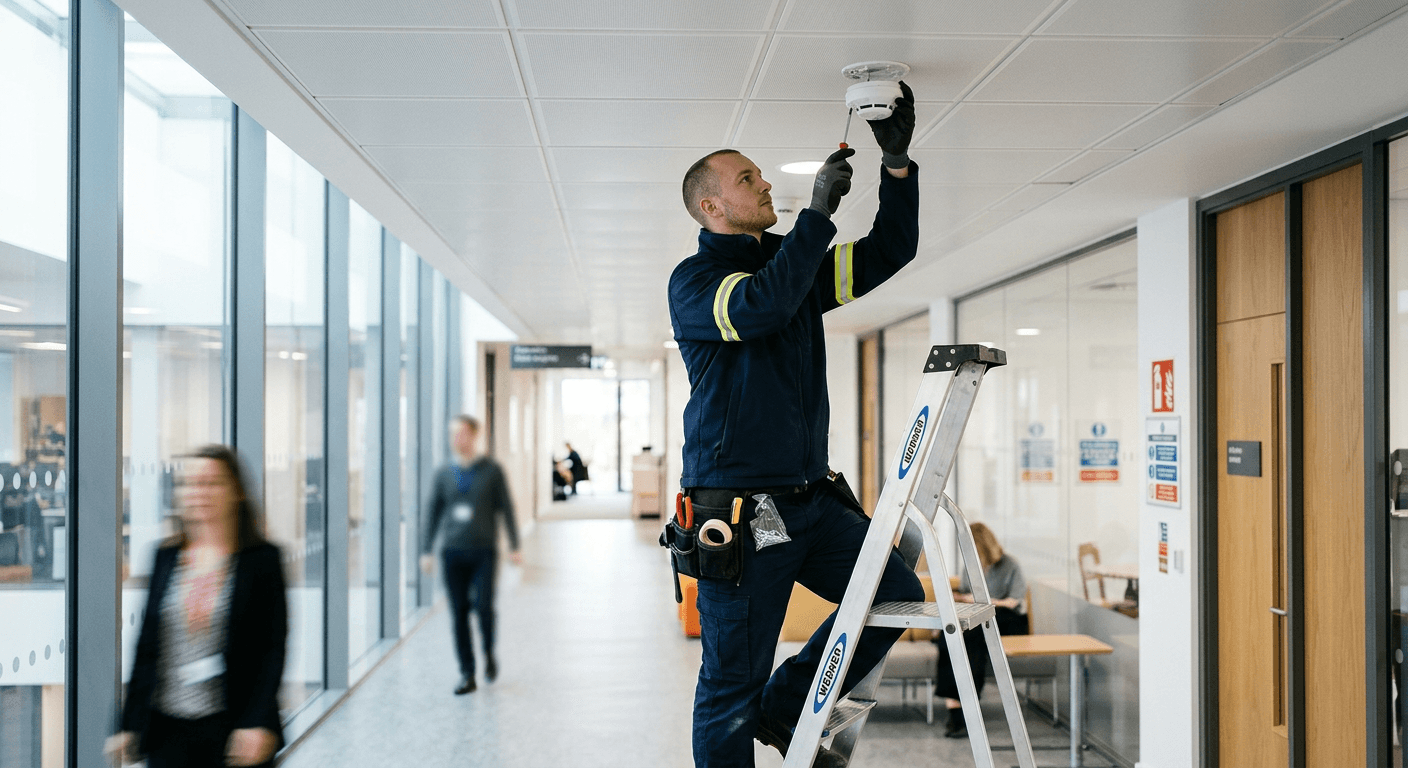
BS 5839-1 recommends that a competent person inspects and services the system at intervals of no more than six months. On each visit we check the panel, batteries and charger, test a share of detectors and call points so every device is tested over the year, confirm sounders and beacons work, and look for changes to the building that affect coverage, such as new partitions or a change of use. Faults and recommendations are written up on the certificate.
- Panel functions, event log and fault history reviewed
- Standby batteries and charger checked
- Detectors, call points and sounders tested on rotation
- Building changes that affect coverage noted
Who does what: your weekly test and our engineer visits
Under the Regulatory Reform (Fire Safety) Order 2005, the responsible person for the premises must keep fire safety systems maintained in good working order. In practice that work is split. Someone on site sets off a different call point each week, checks the alarm sounds and records it in the logbook. Our engineers then carry out the periodic servicing, testing and repairs that need specialist equipment and knowledge. Both halves need to happen for the system to be properly maintained.
- Weekly call point test by your nominated person
- Results recorded in the fire alarm logbook
- Periodic servicing and device testing by our engineers
- Faults reported between visits fixed as remedial work
Taking over another installer’s system and cutting false alarms
Many London buildings change hands or managing agents and end up with a system someone else installed. We service all makes, and whether we can access a particular panel’s engineer menus is confirmed at survey. Repeated false alarms are a common reason people call us. Dust from works, steam near kitchens and the wrong detector type in the wrong place are frequent causes. London Fire Brigade has its own policy on attending automatic fire alarms, so check its current position and make sure your system is not adding to unwanted calls.
- All makes serviced, with panel access confirmed at survey
- False alarm history reviewed from the panel log
- Detector types changed where they suit the room better
- Clear advice on reducing unwanted fire signals
How the job works
- 1Survey the existing systemWe record the panel make, zones or loops, device count and current condition, and look at past certificates and the logbook.
- 2Agree a maintenance scheduleVisit dates are set to suit the building, with access arranged for flats, plant rooms and locked areas.
- 3Service, test and recordEach visit follows BS 5839-1 checks, with the logbook updated and a service certificate issued.
- 4Quote and complete remedialsAny defects are explained in plain terms and priced, so you can approve repairs before they are carried out.
What you get from Lumina in London
- Service certificates and logbook entries you can show your fire risk assessor or insurer when asked.
- Faults are explained in writing with a price, so nothing is changed on your system without your approval.
- The same contractor can maintain your emergency lighting, extinguishers and security systems, which keeps visits and paperwork together.
More local services
Official guidance
- Regulatory Reform (Fire Safety) Order 2005 (legislation.gov.uk)
- Workplace fire safety: your responsibilities (GOV.UK)
Last reviewed: November 2026
Common questions
What does a fire alarm certificate in London actually cover?
A servicing certificate records that the system was inspected and tested on a given date, which devices were checked, and any faults or variations found. It is different from the installation and commissioning certificates issued when a system is first fitted. Keep it with your logbook, as fire risk assessors and enforcing authorities commonly ask to see both.
Our managing agent changed and we have no paperwork. Can you help?
Yes. We can survey the system, identify what is installed, test it and start a new logbook from that point. If the system has problems or the existing design is unclear, we will tell you what we found and what it would take to bring it in line with the relevant standard.
Why does our alarm keep going off when nobody is cooking?
Common causes include dust or debris in detectors, insects, steam from showers, aerosol use, and faulty or ageing devices. Building works nearby can also trigger smoke detectors. We check the panel log to see which devices are activating and when, then clean, replace or change the detector type as needed.
Is servicing every six months enough for a large building?
Six months is the maximum interval BS 5839-1 recommends, and larger systems are often split so a share of devices is tested more frequently across the year. Some sites choose quarterly visits to spread the work. The right schedule depends on the system size, building use and what your fire risk assessment recommends.
Get in touch
Talk to us about Fire Alarm Servicing in London.
Free, no-obligation surveys and quotes for commercial, public and residential properties. Call us or drop us an email and we will get straight back to you.