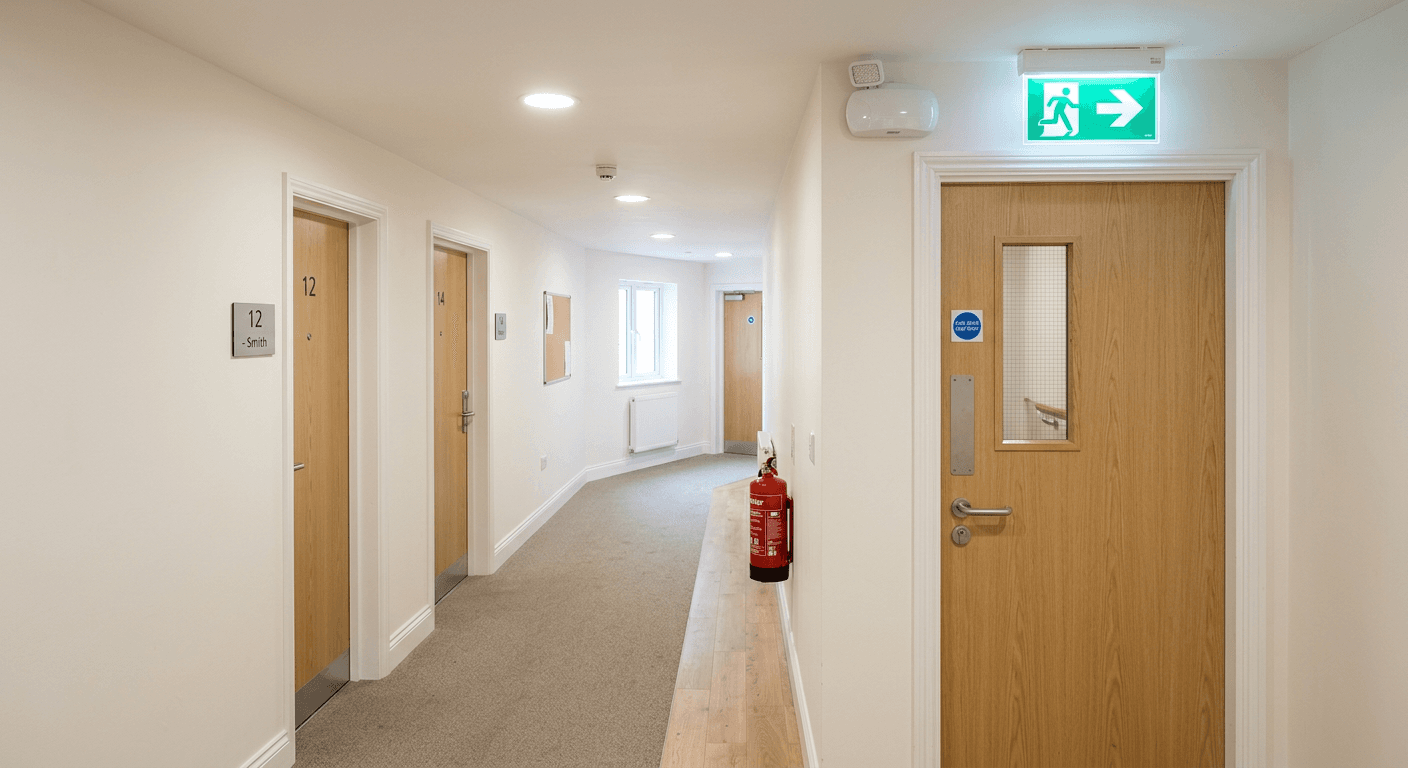
Fire doors · London
Fire door installation in London
Lumina Fire & Security supplies and fits certified fire doors across London for blocks of flats, HMOs, offices and public buildings. We are based in Kent and install FD30 and FD60 doorsets with the correct frames, intumescent and smoke seals, closers, hinges and signage, so the door performs as it was tested.
- FD30 & FD60Certified doorsets supplied and fitted
- CompleteSeals, closers, hinges and signage
- FreeSurvey and quote
FD30, FD60 and what the S means
The number after FD is the fire resistance in minutes when tested. FD30 doors are the most common, used on flat entrance doors, HMO bedrooms and many corridor doors. FD60 is typically specified where a longer period is needed, such as some stair enclosures, plant rooms or doors between different uses. An S suffix, as in FD30S, means the door is also designed to limit cold smoke leakage, usually with a smoke seal. Your fire risk assessment or building control drawings should say which rating each door needs.
- FD30 for most flat entrance, room and corridor doors
- FD60 where a longer rating is specified
- FD30S and FD60S where smoke control is needed
- Ratings taken from your risk assessment or drawings
What makes a fire door installation compliant
A certified door leaf fitted badly will not achieve its rating. The gaps between leaf and frame must sit within the tolerance on the manufacturer’s certificate, usually around 3mm. Intumescent strips must be the right size and in the right place, the closer has to pull the door fully shut from any angle, and hinges, locks and glazing must be compatible with the tested design. Using a complete certified doorset, frame and leaf together, takes much of the guesswork out of it.
- Gaps within the certified tolerance all round
- Correct intumescent and smoke seals fitted
- Self-closer that latches the door every time
- Fire-rated hinges and the right signage
Period buildings, leaseholds and who is responsible
London has a large number of Victorian and Edwardian houses converted into flats, as well as listed and conservation area buildings where an original door may be part of the character. Some historic doors can be upgraded with seals, closers and treatments, while others are better replaced; listed building consent may be needed either way. In blocks of flats, whether a flat entrance door belongs to the leaseholder or the freeholder depends on the lease, so it is worth checking that before ordering.
- Upgrade or replace options for period doors
- Listed building consent flagged before work starts
- Lease terms checked for flat entrance doors
- Communal doors coordinated with the managing agent
How the job works
- 1Measure openings and check ratingsWe measure each opening, check the wall and frame condition, and confirm the rating each door needs from your documents.
- 2Specify the doorset and ironmongeryYou get a schedule of doors, ratings, closers, hinges, locks, glazing and signage, so everyone knows what is being fitted where.
- 3Fit and adjust on siteDoorsets are installed, seals fitted and closers adjusted so each door shuts and latches from any opening angle.
- 4Hand over the paperworkYou receive a record of each door installed, with its rating and certification details for your fire safety file.
What you get from Lumina in London
- Doors fitted as certified doorsets with matching frames, seals and ironmongery rather than mixed parts.
- A written door schedule so landlords, managing agents and leaseholders can see exactly what was installed.
- Fire doors, fire alarms and emergency lighting from one contractor when a block needs all three.
More local services
Official guidance
- Fire door guidance for blocks of flats (GOV.UK)
- Fire Safety (England) Regulations 2022 (GOV.UK)
- Workplace fire safety: your responsibilities (GOV.UK)
Last reviewed: November 2026
Common questions
Who pays for a new flat entrance fire door in a London block?
It depends on the lease. In some blocks the flat entrance door is part of the leaseholder’s demise, in others it is retained by the freeholder. The responsible person still has duties around fire safety in the common parts. Check the lease or ask your managing agent, and we can quote either party.
Can you fit a fire door into an existing frame?
It is possible in some cases, but the frame must be suitable and the result must match a tested configuration. Many older frames are too thin, damaged or the wrong profile. A complete doorset, with leaf and frame supplied together, is usually the more reliable route to a door that performs as rated.
Do HMO bedroom doors need to be fire doors?
In many HMOs, yes. Doors opening onto the escape route are commonly required to be FD30 with self-closers, depending on the size and layout of the property and the local authority’s licensing conditions. Your fire risk assessment and the council’s requirements set the standard, and we fit to that.
Get in touch
Talk to us about Fire Doors in London.
Free, no-obligation surveys and quotes for commercial, public and residential properties. Call us or drop us an email and we will get straight back to you.