Security
Access Control Install, Service & Call Out from Kent, across the South East
Control who goes where and when. We install, service and repair access control and door entry systems, from a single door to multi-site setups.
Access Control for commercial, public and residential buildings
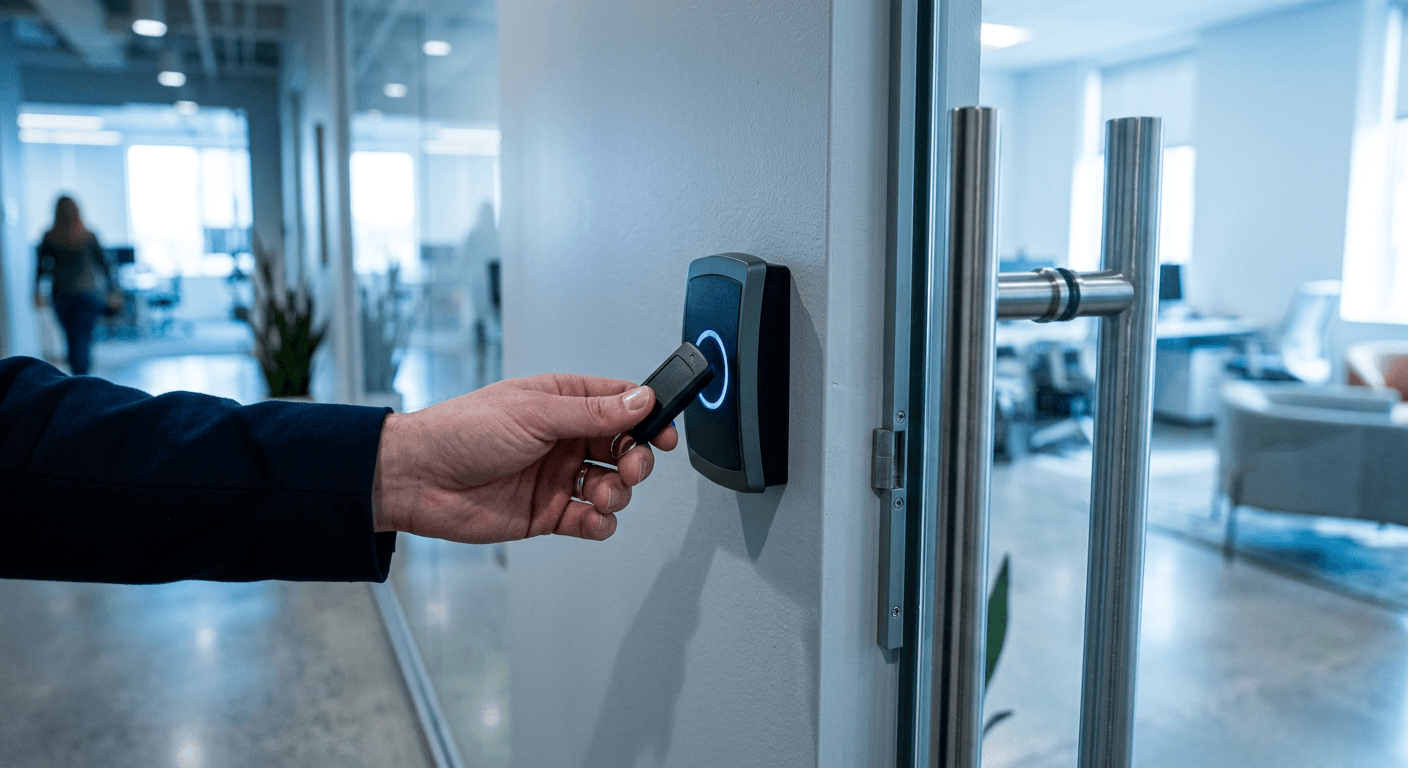
Fob, card, keypad and intercom entry systems for any size of building. Lumina Fire & Security, Kent-based, provides access control work across the South East.
What is included
- Fob, card and keypad entry
- Video and audio intercoms
- Maglocks, strikes and exit buttons
- Servicing and call outs
Fob, card, keypad or mobile: choosing credentials
Keypads are low cost but codes get shared and rarely changed. Fobs and cards give each person their own credential, which can be cancelled in seconds if lost and leaves an audit trail of who entered and when. Mobile credentials use a phone app or Bluetooth reader and suit sites that want to issue and revoke access remotely. Many systems combine methods, for example card for staff and keypad for a delivery door.
- Keypads: simple, but codes are easily passed on
- Fobs and cards: individual, cancellable, logged
- Mobile credentials: issued and revoked remotely
- Time profiles restrict access to set hours
Door entry and video intercoms for flats and shared buildings
In blocks of flats, the main entrance usually has an entry panel that calls each flat, with handsets or video monitors inside. Video intercoms let residents see who is at the door before releasing it, and app-based systems forward calls to a phone. Adding a fob reader to the same panel gives residents keyless entry and lets managing agents remove access when a tenancy ends.
- Audio or video handsets in each flat
- App call forwarding when residents are out
- Fob reader on the entry panel for keyless access
- Trades buttons can be disabled or time-limited
Locking hardware and fire escape routes
Maglocks hold a door with a magnet and release when power is cut, which makes them fail-safe. Electric strikes can be fail-safe or fail-secure depending on the door’s use. On escape routes, locks generally need to release automatically when the fire alarm activates and have a green break-glass or exit button. BS 7273-4 gives guidance on how door release should interface with the fire alarm, and because we install both systems, that link is designed in from the start.
- Maglocks release on loss of power
- Strikes chosen fail-safe or fail-secure per door
- Fire alarm interface releases escape doors
- Exit buttons and break-glass units on the secure side
Planning which doors to control and how
Start with how people move through the building rather than with hardware. Main entrances, staff-only areas, server or stock rooms and vehicle gates each need a different approach. A reader on every internal door adds cost and slows people down, so most sites control the perimeter and a few sensitive rooms, then use time profiles and user groups to shape who goes where. Each door also needs checking for its frame, closer and glazing, and for whether it is on an escape route or is a fire door, as these decide which lock, reader and exit device can be fitted.
- Perimeter doors and sensitive rooms prioritised
- User groups set by role rather than by person
- Escape route and fire door status checked per door
- Gates and barriers considered alongside the building
Running the system after handover
Access control only stays secure if the user list is kept up to date. At handover, the people who will manage the system are shown how to add and remove users, cancel lost fobs or cards, change time profiles and pull reports of who entered where. Leavers should be removed on their last day, and a periodic check of active users catches fobs that were never returned. We leave a record of the door hardware, controller settings and power supplies, and the system can go onto a servicing schedule so locks, closers and batteries are checked before they fail.
- Training for the people who manage users
- Lost fobs and leavers cancelled straight away
- Entry reports pulled for incidents or audits
- Door hardware and power supplies recorded
How the job works
- 1Door-by-door surveyEach controlled door is assessed for construction, frame, closer, cable route and escape requirements, and visitor entry needs are noted at the main entrance.
- 2Access plan in writingReaders, locks, intercoms and user groups are set out in writing, including how each door behaves when the fire alarm sounds or the power fails.
- 3Install and commissionReaders, locking hardware, exit buttons, power supplies and the controller are fitted, then every door is tested for release, re-locking and the fire alarm interface.
- 4Enrol users and train administratorsFobs, cards or mobile credentials are issued, and your nominated administrators are shown how to manage users and run access reports themselves.
Access Control near you
Local pages with details for the areas we cover most, plus every county and city we work in.
Access Control: common questions
Can access control be added to my existing doors?
Usually, yes. Most solid doors in sound frames can take a maglock or electric strike, a reader and an exit button. The survey checks the door construction, frame, closer and how cables can reach the door. Glazed, very lightweight or fire-rated doors may need specific hardware, and fire doors must not be altered in a way that affects their fire performance.
What is the difference between door entry and access control?
Door entry lets a visitor call someone who then releases the door, typically through an intercom. Access control lets authorised people let themselves in using a fob, card, code or phone, and records who did so. Many buildings use both on the same entrance: an intercom panel for visitors and deliveries, and a reader for residents or staff.
What happens to access-controlled doors in a power cut?
That depends on the locking hardware and the backup power supply. Fail-safe locks such as maglocks release when power is lost, keeping escape routes open. Fail-secure locks stay locked and are used where security matters more and a mechanical override exists. A battery-backed power supply keeps the system running for a period, and the right setup for each door is agreed at design stage.
Can you service and repair an access control system someone else fitted?
In most cases. Typical faults include failed power supplies, worn maglock keepers, damaged readers, door closers that no longer pull the door shut and intercom handsets that have stopped working. We test the system, replace failed parts and can take the system onto a servicing schedule. If the controller software is locked to another installer, we will explain the options.
Related services
Get in touch
Talk to an engineer about your building.
Free, no-obligation surveys and quotes for commercial, public and residential properties. Call us or drop us an email and we will get straight back to you.